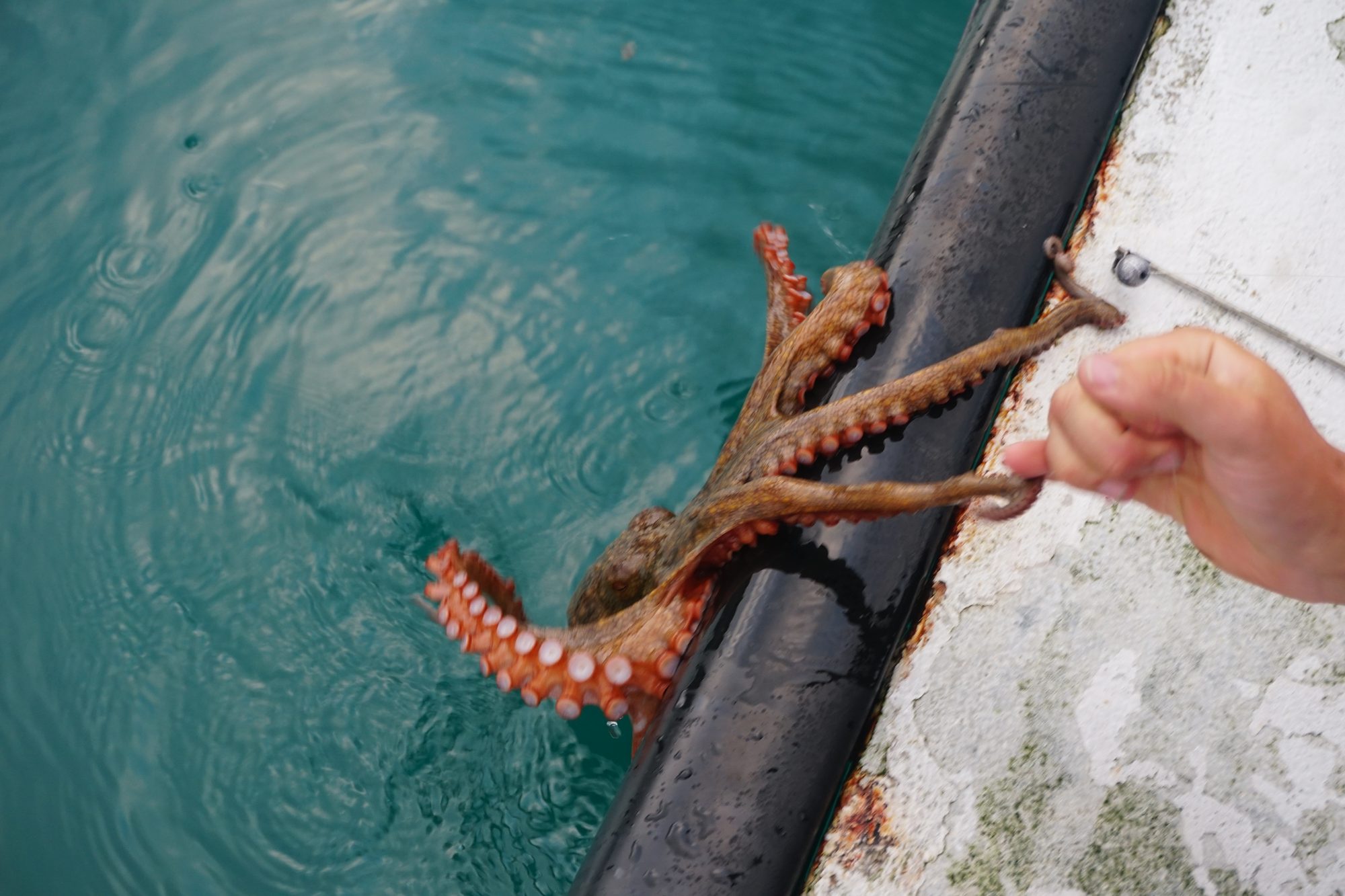
Octopuses have eight arms and one bulbous head. They can camouflage and change colour depending on their background — thought to be their defence mechanism against predators. In New Zealand, octopus predators include Sea Lions, Buller's Albatross, Whales and other marine life. They usually take refuge at subtidal rocky reefs and seaweed beds where they hunt crabs and crayfish.
According to Maori legend, the octopus or Te Wheke is a picture of family health — signifying the link between the mind, the spirit, and the different aspects of life interwoven for one's wellbeing.
FASCINATING FACTS ABOUT OCTOPUSES
Short lifespan — After an adult male and female octopus mate, the male dies. The female follows soon after the eggs hatch.
Zero bones — Having no bones makes octopus flexible enough to fit into tiny spaces. In 2016, Inky, a male octopus, escaped New Zealand's National Aquarium through a small opening — making octopuses legendary escape artists.
Three hearts — One heart pumps blood through the organs; the other two pump blood through the gills.
Blue blood — The high hemocyanin content in their blood gives it a blue colour.
OCTOPUS IN NEW ZEALAND
Around 42 octopus species live in New Zealand waters. This includes two of the world's largest types: the giant gelatinous octopus (grows up to 4 metres) and the giant South Pacific octopus (up to 3 metres).
Here at The Rock Adventure Cruise, we sometimes spot octopuses while fishing or swimming in the Bay of Islands. Seeing them in their natural habitat is a wonderful treat for everyone aboard.